



-
Who We Are
Overview
Sasol is a global chemicals and energy company. We harness our knowledge and expertise to integrate sophisticated technologies and processes into world-scale operating facilities. We safely and sustainably source, produce and market a range of high-quality products, creating value for stakeholders.
-
Our Businesses
Overview
Through proprietary technologies and processes the main products Sasol produces are fuel components, chemical components and co-products. From these main products and further value-adding processes we deliver diesel, petrol (gasoline), naphtha, kerosene (jet fuel), liquid petroleum gas (LPG), olefins, alcohols, polymers, solvents, surfactants, co-monomers, ammonia, methanol, crude tar acids, sulphur, illuminating paraffin, bitumen and fuel oil. Even further processing produces numerous additional products.
-
ESG
Overview
Advancing chemical and energy solutions that contribute to a thriving planet, society and enterprise.
-
Investor Centre
Overview
Sasol's investors consist of both equity investors (those invested in the Sasol ordinary shares or the ADRs) and lenders/debt investors (banks and institutional investors lending to Sasol or investing in its issues of debt instruments such as local bonds, offshore bonds, commercial paper issues, project finance, loans and other credit facilities and convertible instruments).
-
Suppliers
Overview
Supply Chain is the custodian of all external spend for the Sasol Group. It is responsible for managing supply and demand so as to ensure cost-efficiency and maximise return on spend, while at the same time ensuring effective logistics of a range of deliverables.
-
Careers
Overview
Explore existing opportunities to energise your career to the next level. Whether you are seeking a Learnership or you are Student or Graduate or Experienced Hire. Find out how you can add value to the Sasol Team.
-
Media Centre
Overview
Access media releases and view latest social media updates
Sasol’s response to the Centre for Research on Energy and Clean Air (CREA) Report
Sasol’s response to the Centre for Research on Energy and Clean Air (CREA) Report
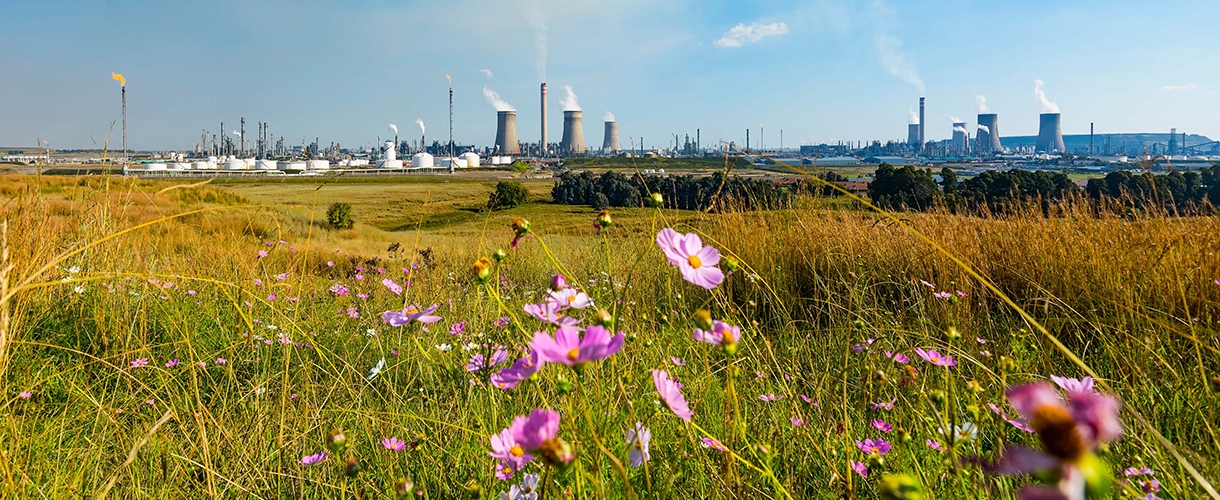
The Centre for Research on Energy and Clean Air (CREA) recently published a report that attributes significant health and economic impacts to emissions from Sasol’s Secunda operations. We recognise the importance of these issues and the legitimate public interest they attract.
Strong conclusions require strong evidence. Complex air quality and health impact studies can be highly sensitive to underlying assumptions, input data, source attribution methodologies and modelling choices. Scientific findings of this nature therefore require careful scrutiny and independent verification before being accepted as established fact.
Sasol’s preliminary review of the CREA report has identified several areas that warrant further examination and validation, including the use of historical emissions data for certain pollutants, the application of meteorological data from a different period to the reporting year assessed, assumptions relating to source allocation and the treatment of uncertainty. These observations do not predetermine the review outcome but reinforce the importance of independent verification.
Sasol believes an independent third-party review of the CREA report is necessary to assess the emissions inventory, modelling assumptions, source attribution methodology, health impact calculations, baseline data and uncertainty ranges used in the assessment. Sasol intends to conduct this review over the coming months and engage CREA as part of the process.
During Sasol’s appeal to the Minister of Forestry, Fisheries and the Environment for a load-based limit for sulphur dioxide (SO2) emissions from its boilers at the Secunda steam plants towards the end of 2023, an independent review of CREA’s data provided at the time, identified significant differences in methodology, assumptions and calculations that materially influenced CREA’s conclusions. This was considered by the Minister’s appointed independent advisory panel, which ultimately informed the Minister’s granting of the requested alternative dispensation. This prior robustness testing reinforces the importance of complete, transparent and independently verifiable scientific analysis when evaluating matters in the public interest.
Sasol remains committed to improving ambient air quality and managing associated health impacts. Since 2015, Sasol has invested more than R9.5 billion in emission-abatement initiatives and implemented numerous air quality improvement projects across its operations. These include particulate matter abatement technology on boilers, low-NOx burners on boilers and gas turbines, the decommissioning of bio-sludge and high organic water incinerators, volatile organic compound reduction projects, and boiler turndown initiatives that support further emission reductions.
These investments have enabled compliance with the applicable Minimum Emission Standards for particulate matter, nitrogen oxides and the vast majority of regulated emission sources across our operations. We continue to comply with the emission requirements in our atmospheric emission licences, including implementation of the integrated emissions-reduction solution undertaken as part of Sasol’s Clause 12A application and appeal.
Our latest disclosures are available in Sasol’s 2026 annual reporting suite at https://www.sasol.com/investor-centre/integrated-reports.