-
Who We Are
Overview
Sasol is a global chemicals and energy company. We harness our knowledge and expertise to integrate sophisticated technologies and processes into world-scale operating facilities. We safely and sustainably source, produce and market a range of high-quality products, creating value for stakeholders.
-
Our Businesses
Overview
Through proprietary technologies and processes the main products Sasol produces are fuel components, chemical components and co-products. From these main products and further value-adding processes we deliver diesel, petrol (gasoline), naphtha, kerosene (jet fuel), liquid petroleum gas (LPG), olefins, alcohols, polymers, solvents, surfactants, co-monomers, ammonia, methanol, crude tar acids, sulphur, illuminating paraffin, bitumen and fuel oil. Even further processing produces numerous additional products.
-
ESG
Overview
Advancing chemical and energy solutions that contribute to a thriving planet, society and enterprise.
-
Investor Centre
Overview
Sasol's investors consist of both equity investors (those invested in the Sasol ordinary shares or the ADRs) and lenders/debt investors (banks and institutional investors lending to Sasol or investing in its issues of debt instruments such as local bonds, offshore bonds, commercial paper issues, project finance, loans and other credit facilities and convertible instruments).
-
Suppliers
Overview
Supply Chain is the custodian of all external spend for the Sasol Group. It is responsible for managing supply and demand so as to ensure cost-efficiency and maximise return on spend, while at the same time ensuring effective logistics of a range of deliverables.
-
Careers
Overview
Explore existing opportunities to energise your career to the next level. Whether you are seeking a Learnership or you are Student or Graduate or Experienced Hire. Find out how you can add value to the Sasol Team.
-
Media Centre
Overview
Access media releases and view latest social media updates
Renewable Diesel
Renewable Diesel
Renewable Diesel
Renewable diesel is a sustainable fuel made from the same feedstock as biodiesel, but is made by first removing the oxygen from the waste oil residues or virgin non-edible oils, thus giving a hydrocarbon with similar chemical and physical characteristics to fossil diesel. Unlike biodiesel, renewable diesel meets the fuel specification of fossil diesel thus can be used directly as a transport fuel. It can also be used as a “drop-in” fuel with fossil diesel. Renewable diesel (RD) or Hydrogenated Vegetable Oils (HVO) is produced through hydrotreating of biolipid feedstocks (e.g., Used Cooking Oils, Virgin Vegetable oils). It typically requires a refinery and/or a bespoke bio-refinery process which is more capex intensive. Renewable diesel meets the EN-15940 specification for petroleum diesel and can be seamlessly blended, transported, and even co-processed with petroleum diesel. The Blending ratio of RD with fossil fuels is not limited, and therefore can be between 0 – 100%, subject to the final product specifications. This means that RD can be used in its purest form, HVO-100 / ‘neat’ HVO, in the current vehicles.
Sasol’s Renewable Diesel Roadmap and Ramp-up potential:
Sasol’s owns and operates competitively advantaged assets that can be effectively re-purposed to produce RD and other renewable fuels depending on demand. As a low capital and quick to market opportunity, Sasol is planning to co-process low-carbon sustainable feedstocks into its existing facilities which are located in Natref, Sasolburg and Secunda. Natref will be the first asset to produce biofuels (Renewable Diesel and SAF).
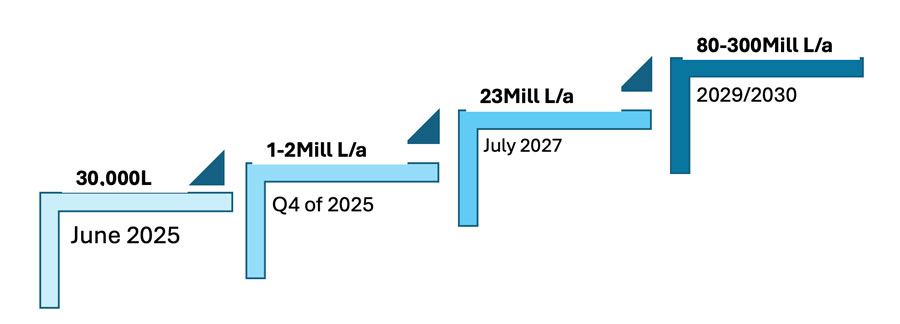
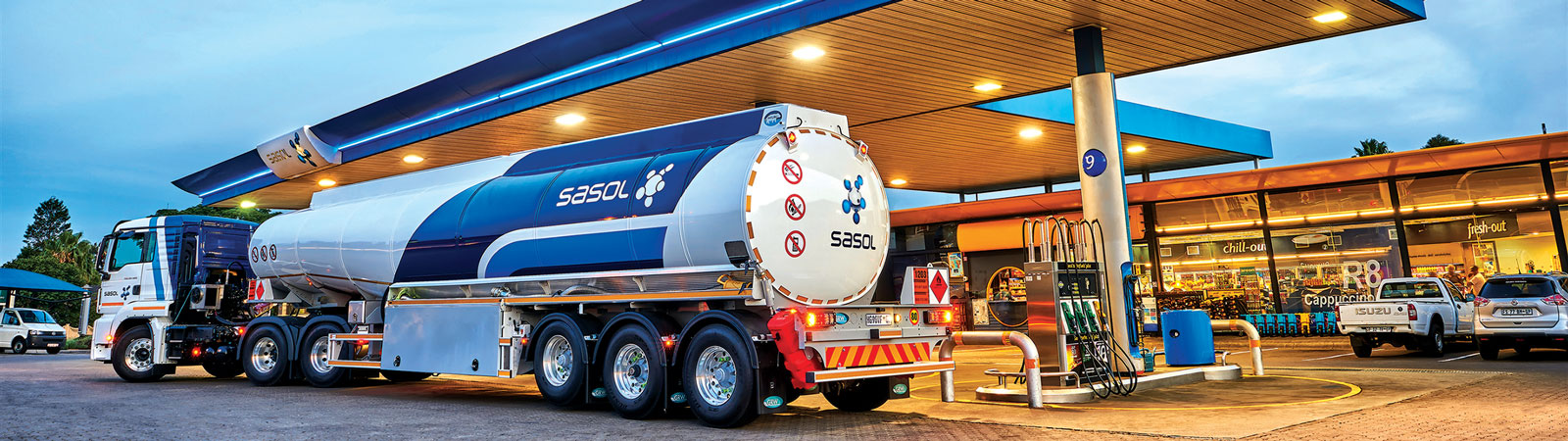
In August 2024, Sasol produced the first batch of Renewable Diesel in its Research and Technology (R&T) facilities. The volume produced was 1,000 litres which was used in a Sasol fuel truck which travelled across two sites as a demonstration of the ‘drop-in’ nature of the fuel. In June 2025, Sasol produced its first commercially available Renewable Diesel (30,000 litres) produced form Used Cooking Oil (UCO). Below is Sasol’s biofuels ramp-up profile which will be underpinned by customer demand to further unlock the potential scale.